This is fiction built on fact. Everything up to 14 October 2026 really happened. Everything after that date is invented.
Wessel Janse van Rensburg · October 2026
Before October 2026
How Europe came to run on American diesel
The North Atlantic, with Europe's diesel routes
Every lorry on the autobahn, every combine at harvest, every oil boiler in a Brandenburg farmhouse runs on diesel, and Europe has never made enough of it. Its refineries were built in the age of petrol. For decades the gap was filled from one place. Before 2022 almost half of the diesel Europe imported came from Russia, most of it from Baltic ports a day or two's sailing from Rotterdam.
Europe had widened the gap itself. In the 2000s and 2010s, instead of investing early in hybrids or electric cars, its carmakers bet on diesel as the cleaner choice. A diesel engine burns less fuel per kilometre and so emits less CO2, which helped them meet EU climate targets, and most governments taxed diesel more lightly than petrol. In Germany the standard rates still differ by about 18 cents a litre. In 2010, 56% of the new cars sold in Western Europe ran on diesel. The Volkswagen emissions scandal of 2015 ended the boom, but millions of those cars are still on the road, and Europe's thirst for imported diesel grew with them.
The war in Ukraine ended the Russian trade. On 5 February 2023 the EU's ban on Russian refined fuels took effect, and within two years Russian diesel imports fell from 29.9 million tonnes to 2.9 million. The Middle East took Russia's place. Saudi refineries at Jubail, Yanbu and Jizan and Kuwait's new Al-Zour plant sent tanker after tanker up the Red Sea and through the Suez Canal. The United States and India supplied most of the rest.
Then, on 28 February 2026, American and Israeli aircraft struck Iran. Within weeks the Strait of Hormuz, the only way out of the Gulf by sea, was all but closed. By June, diesel from the Gulf had almost vanished from European ports, and Europe's diesel imports in May were the lowest in ten years. American refineries on the Gulf of Mexico filled the gap.
By October 2026, a continent that had cut itself off from Russian fuel on principle depended on a single supplier for the fuel that moves its goods. Almost nobody in Brussels or Berlin described it that way. That supplier was their long-time ally, after all. The diesel kept arriving, so nobody had to.
Washington had already shown Europe what it was prepared to do. On 1 October, according to reports, the US told Germany and France to release their strategic diesel stocks or face an American ban on diesel exports. Berlin refused to commit: its reserves, the economy ministry said, were for physical shortages, not for managing prices. Paris proposed a release of 50 million barrels of diesel, on condition that the US forgo an export ban. On 2 October the G7 agreed a joint release of 100 million barrels of diesel and crude. Whether Washington gave the promise Paris asked for was never made public.
October 2026
The storm, the boat and the ban
The Gulf of Mexico, where Europe's diesel now comes from
In Iowa the harvest had started, and every combine ran on diesel. On 21 September the national average reached $6.50 a gallon, a record. Senator Chuck Grassley, 93 years old and in the Senate since 1981, took to X: “High diesel prices ARE KILLING FARMERS INCOME.” He asked the president for an embargo on diesel exports, “like presidents in the 70s put embargoes on ag products”. At the United Nations a few days later Trump said he had told his people, “let's not send out the diesel.” His Interior Secretary, Doug Burgum, disagreed in public: a ban would not lower prices.
The pressure on Trump was largely of his own making. The war with Iran that he had begun on 28 February had closed the Strait of Hormuz and pushed American fuel prices up by about half. On the day diesel set its record, petrol averaged $5.01 a gallon. His approval had fallen to 32% in a Reuters/Ipsos poll in mid-September, the lowest the pollster had ever recorded for him, and support for the war was slipping even among Republicans. The midterm elections were seven weeks away, and the polls gave the Democrats a clear lead. He could not end the war on the timetable the election set. He could go after the price of diesel.
Chart 1 · Pressure on Trump: the price of diesel and his approval, February to October 2026 · Real
US on-highway diesel, weekly, EIA. Approval among all US adults, Reuters/Ipsos, each poll dated on its last day of fieldwork.
The threat of 1 October had not worked. Berlin would not release stocks to manage prices, and the G7's 100 million barrels made no difference at the pump.
On 9 October Trump tried another way. After a call with Vladimir Putin he announced that Russia would ship 300,000 tonnes of diesel at once, 500,000 tonnes in November and a million tonnes after that. The Treasury suspended sanctions on Russian diesel until April 2027. Europe was stunned. Volodymyr Zelenskyy condemned the deal the same day. Analysts pointed out that the first shipment would cover fifteen hours of American demand.
That night Hurricane Isaias, the first hurricane of the season, came ashore near Destin, Florida, as a Category 2 storm. Chevron had shut five of its production sites in the Gulf and braced its Pascagoula refinery, one of the largest in the country, for a direct hit. The storm tracked east, and the refineries were spared. Nearly a million homes and businesses lost power across Florida and Alabama, and at least four people died. Diesel traders, who had bought heavily ahead of the storm, sold again on Monday. The relief lasted ten days.
Trump's new partner had a price, and Kyiv paid it first. On 10 October, the day after the diesel deal, Russian glide bombs killed twenty people in Zaporizhzhia, and Zelenskyy said Moscow had sent its thanks for the lifting of sanctions. Trump's answer, to reporters at the White House, was that Ukraine's strikes on Russian refineries were hurting the world's diesel supply, and that it was “time for Ukraine to get a new president”. On the Sunday he declared an “energy ceasefire” between Russia and Ukraine on Truth Social. Kyiv learned of it from the news, and Russian strikes on Ukrainian power stations went on that night. On the Monday two ballistic missiles hit Kyiv without the American warning that usually precedes them, and Zelenskyy told NPR the next day that Washington had threatened to cut off intelligence unless the refinery strikes stopped. Trump denied it. Overnight into Wednesday 14 October, Ukraine's military Starlink terminals were slowed without notice: anything moving faster than 160 km/h lost its link, which is to say the drones. Units cancelled missions. Musk said the limits were “decided by the US military and ultimately POTUS”. Poland, which pays for Ukraine's Starlink, asked him whether he was playing politics with his products again. Europe took note. A president who would slow Ukraine's drones over the price of diesel was not going to spare its tankers.
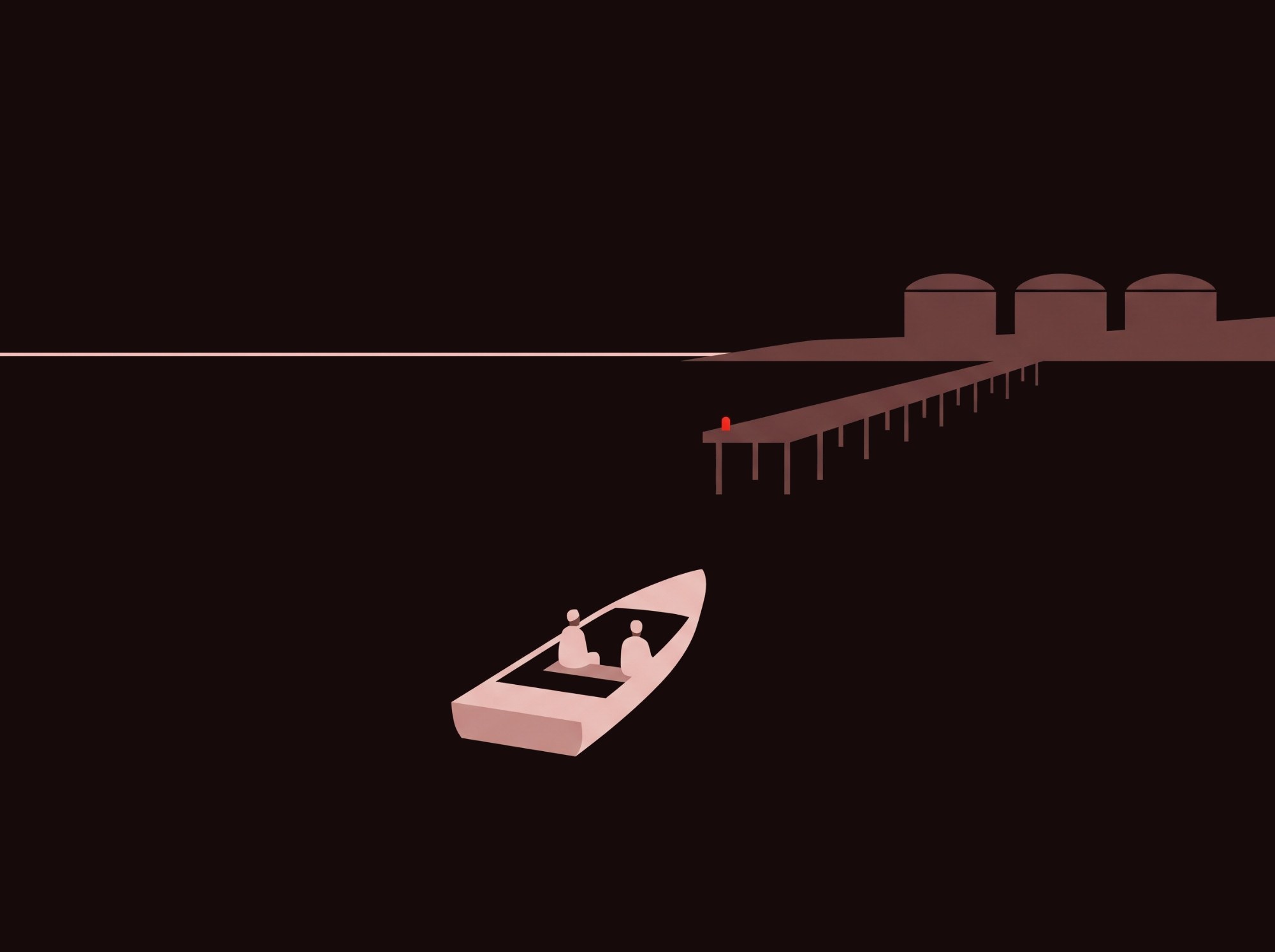
Before dawn on 20 October a small boat approached the loading jetties at Yanbu, on Saudi Arabia's Red Sea coast. With Hormuz closed, Yanbu had become the kingdom's main way out: a pipeline across the desert fed it crude, and two large refineries there, SAMREF and YASREF, exported diesel. The first reports called the boat a Houthi sea drone. It was not. Saudi investigators later found the remains of two men aboard. It had been a suicide mission. A jetty burned for three days. Brent crude rose 8% in a day.
Story · 20 Oct 2026 · The boat at Yanbu. Drawn for this page: the first picture of an invented event.
On 27 October Trump banned diesel exports “until prices come down”. The 1975 law that once let presidents restrict oil exports had been repealed in 2015, so his lawyers used something else. They pointed to the national energy emergency he had declared on his first day back in office, 20 January 2025, and to the International Emergency Economic Powers Act, which lets a president regulate or prohibit exports in an emergency. In February 2026 the Supreme Court had ruled that the same law did not let him impose tariffs, because tariffs are taxes and taxes belong to Congress. Blocking exports was a different matter: the law covers exports in so many words. Canada and Mexico were exempted. Europe was not.
He left liquefied natural gas alone. His advisers were clear about why. LNG was his best bargaining chip: Japan, Korea and the EU had all promised to buy it in their trade deals, and the exporters, Cheniere and Venture Global, were friends of the White House. Diesel mattered less to his trade policy, he thought, so he could afford to hold it back. For Europe, it was the fuel that moved everything.
For Europe, it was the fuel that moved everything.
There was a cost at home that few in the White House wanted to discuss, and it had nothing to do with diesel. America's growth that year rested on one thing: the building of data centres for artificial intelligence. The five largest builders, Alphabet, Amazon, Meta, Microsoft and Oracle, had announced $840bn of capital spending for 2026. That is $2.3bn a day, or $26,600 a second. It is roughly the Pentagon's annual budget, and 2.7% of everything the American economy produces. It was more than five times what the five had spent in 2023. On the government's own measure, American investment in computers and software had already passed its dot-com peak of 2000. In the twelve months to the autumn, the five's spending took 83 cents of every dollar their businesses brought in, against 62 cents a year earlier. The rest was borrowed. In June the Bank for International Settlements, the central banks' own bank, had set the build-out beside the American canal boom of the 1830s, Britain's railway mania of the 1840s, electrification in the 1920s and the dot-com boom. Each was built on a real invention. Each drew more money than the invention could repay. Each ended with investment going into reverse, and a recession. Torsten Sløk, chief economist at Apollo, reduced the lenders' faith to one number: the five's operating cash flow would have to grow from $600bn in 2025 to $2tn in 2030.
Chart 3 · The ladder: what the five spend, against the cash the lenders assume · Real and plan
Capital spending from the five companies' cash-flow statements; the 2026 bar is their announced plan. The rungs are the consensus path Torsten Sløk cited: $600bn of operating cash flow in 2025, $2tn by 2030. Anthropic's run rate from its own posts; the band is what investors expected for the end of 2026.
Money was already getting dearer. Ruchir Sharma of Rockefeller International had argued in September that every bubble of the past three centuries had ended when money became more expensive, and that the line to watch was a ten-year US Treasury yield held above 5%. It closed above 5% on 23 September and stayed there; on 30 September it reached 5.29%, the highest since 2002. On 7 October, after reports that SpaceX was seeking another $40bn for chips, the premium on the bonds it had sold in June widened, and the cost of insuring its debt against default reached a record. A diesel ban would feed inflation and push the yield higher still. The White House imposed it anyway.
Late October 2026
Europe answers, and the old East feels it first
Germany, and the refinery at Schwedt
The ban hit a market that was already stretched. At the end of September a litre of diesel in Germany cost €2.41 on average, against €1.59 a year earlier and €1.39 across 2021. A temporary fuel tax cut of 14 cents a litre, 16.7 cents with VAT, took effect on 1 October and brought it to about €2.25. In 2026 the US had become Europe's largest source of imported diesel, supplying perhaps a third to a half of it. Within days of the ban, the tankers stopped coming.
Chart 2 · Diesel in Germany, € a litre, 2021 to March 2027 · Real to 14 October, story after
ADAC monthly averages to September 2026 and daily readings of 30 September and 7 October; the temporary tax cut of 1 October is in the price. The story's prices are estimates; Appendix D in version 9 of the text explains how they were worked out.
Heating oil rose by about the same number of cents per litre. Because heating oil is taxed far more lightly, that was a bigger rise in percentage terms: a household buying 2,500 litres for the winter paid about €1,250 more in November than it would have in early October.
Emmanuel Macron was the first European leader to respond. He called the ban an act of economic war against allies and asked the EU to hold back the petrol it sells to the American East Coast. Friedrich Merz backed him the next day.
Neither could act alone. Trade is one of the few areas where only the EU can act, and no member state may restrict exports on its own. But the EU had a tool. A 2015 regulation on exports lets the Commission require a licence for exports of essential goods when a shortage threatens. Brussels had used it twice before: for masks and protective equipment in March 2020, and for Covid vaccines in January 2021, after AstraZeneca shipped doses to Britain while falling short on its EU contract. Within a week the Commission required licences for petrol exports to the US, for six weeks at first, and national customs offices stopped issuing them. World Trade Organization rules allow temporary export limits to relieve a critical shortage, and in June Europe's petrol stocks had been at their lowest for the month since 2014. It was the first time the EU had used export controls against its closest ally.
The effect was mostly symbolic. In the second quarter of 2026 Europe had sent the US about 252,000 barrels of petrol a day, the lowest for the time of year since 2020. Washington had waived the Jones Act, the century-old law that keeps foreign ships out of trade between American ports, so Gulf refiners could ship to Boston and New York on foreign tankers. They made up the difference within weeks. The move cost America almost nothing. But the important thing was that the French and European public loved it. For the first time, Europe had hit back in public. An Ifop poll for Le Journal du Dimanche showed Macron's approval rising for the first time in months, and the ARD-DeutschlandTrend, polled by infratest dimap, showed the same for Merz. Both started from low levels. Both rose.
For the first time, Europe had hit back in public.
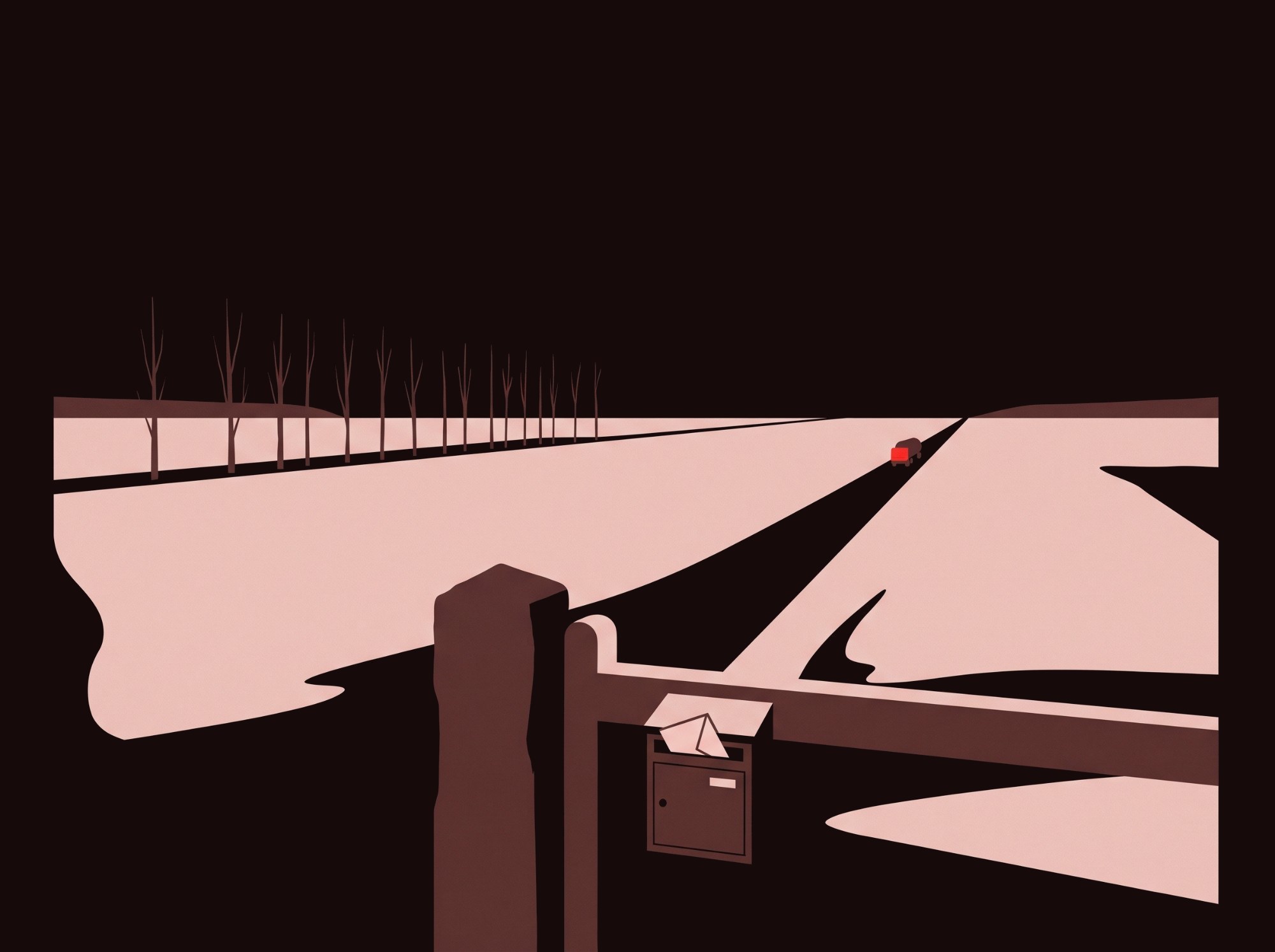
In Germany the shock arrived through the letterbox. Millions of German homes heat with oil, which is almost the same product as diesel, and households fill their tanks in autumn. Heating oil bills that arrived in early November were the highest since the winter of 2022. Hauliers, who carry Europe's freight across the country, added surcharges. Farmers remembered January 2024, when they had blocked Berlin with tractors over a much smaller cut to their diesel subsidy. They began to organise again.
Story · Nov 2026 · The letterbox: the heating-oil bill arrives. Drawn for this page.
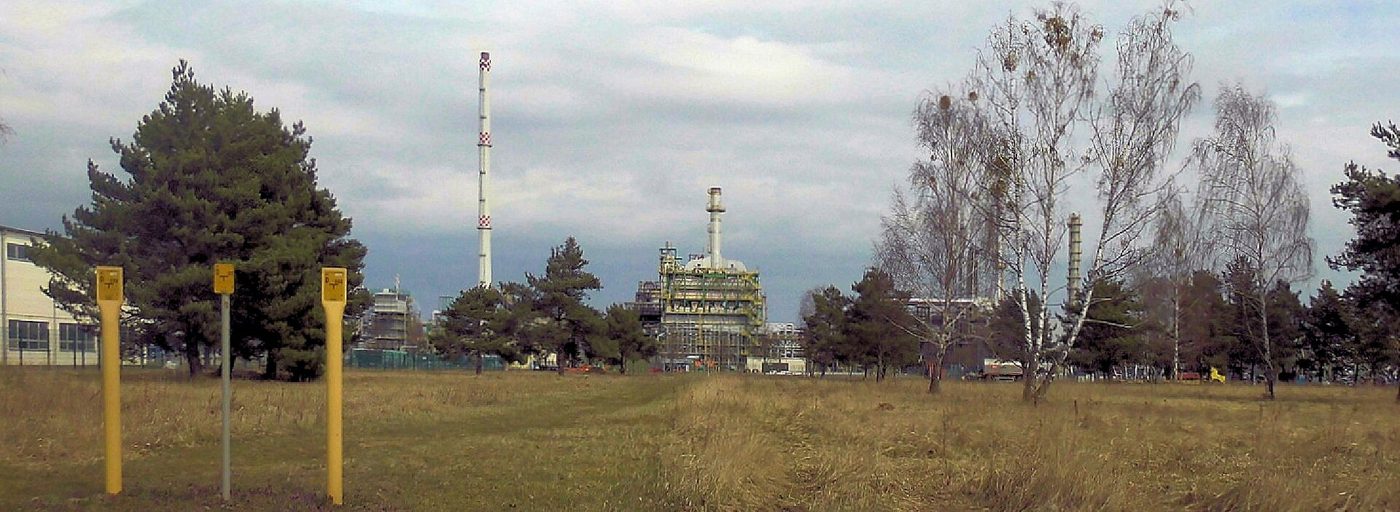
The old East felt it first. More than 90% of Berlin's fuel comes from one refinery, PCK in Schwedt, an hour north-east of the capital on the Polish border. Schwedt was built to run on Russian crude from the Druzhba pipeline, whose name means friendship. Germany took it out of Rosneft's hands in 2022, and it now runs at about 80% of capacity on crude from Kazakhstan, which still flows through Russia, and on tanker crude landed at Rostock and Gdansk. It could not make enough diesel to replace what had stopped coming in by sea.
Real · The PCK refinery at Schwedt, March 2023. Rauenstein, CC BY-SA 3.0.
On 6 September the AfD had won 43.8% of the vote in Saxony-Anhalt, its best result in any state. The party had spent two years building ties with Trump's movement. Its MPs had been received at the White House in September 2025 and had hosted Republicans at the Bundestag in March 2026. Since the Iran war its leaders had kept their distance in public, and Alice Weidel had criticised Trump as early as January. Now an American president was cutting off German diesel, and the pressure on the AfD to break with him openly grew. It found a way round it. Its leaders, and those of the BSW, asked one question at every rally: if Donald Trump can buy Russian diesel, why can't Germany? The pipeline to Schwedt was still there. Only a political decision stood between Russian crude and the refinery that fuels Berlin. The argument went down badly with most of the German public. It rested on a callous self-centredness at Ukraine's expense, and Merz read the mood.
November 2026
The vote, the missile and the speech
The United States, on election night
On 3 November American voters punished the party in power for the price of fuel. The Democrats took the House and, to the surprise of most forecasters, the Senate too. Susan Collins held her seat in Maine, one of the few Republicans in a competitive race to survive. The new Congress would not sit until January, and the tools Trump was using, emergency powers and national-security tariffs, needed no vote in Congress. A weaker president at home was not going to be a gentler one abroad.
Fuel was not the only thing on voters' minds. Hiring had all but stopped. The US had added about 116,000 jobs in the whole of 2025 and about 68,000 a month in the first nine months of 2026, with outright losses in February and July. Weak hiring through the second half of 2026 argued for lower interest rates. Rising prices, now fed by the diesel ban, argued for higher ones. Under pressure from both sides, the Federal Reserve under Kevin Warsh, apart from one rise of a quarter point, kept rates where they were, and the ten-year Treasury yield stayed above Sharma's line.
Chart 4 · US jobs, the change each month, 2023 to March 2027 · Real to September 2026, story after
Bureau of Labor Statistics, nonfarm payrolls, current vintage. The months after September 2026 are the story's; three of them are filler the text does not name.
Two weeks later, on 18 November, Russian cruise missiles struck Rheinmetall's new artillery shell plant in Ukraine. The joint venture with Ukraine's state arms maker, 51% owned by Rheinmetall, had begun producing 155mm shells that summer. Its location had been kept quiet, described by Kyiv only as a "safe region". Rheinmetall's German country head was on site that morning. He was killed with three Ukrainian workers. German investigators came to suspect that he had been the target. In Kyiv the blame fell on the air defences. Ukraine was short of Patriot interceptors, and the reason was the war in Iran: the US had fired off about half of its own stock defending its bases in the Gulf, and in the first half of 2026 Ukraine had received a third as many interceptors from its allies as a year earlier.
Story · 18 Nov 2026 · The shell plant, the morning after. Drawn for this page.
It was not the first time Russia had aimed at Rheinmetall. In July 2024 US intelligence had warned Berlin of a Russian plot to kill the company's chief executive, Armin Papperger. In September 2026 incendiary devices had been thrown at a defence site in Munich, an attack German media linked to Russian military intelligence. This time there was nothing deniable about it. A German citizen working for a German company had been killed by a Russian missile.
Berlin was squeezed from both sides. Russia was offering diesel to the US, and attacking German factories at the same time. Washington was cutting off diesel, and Germany's defence leaned on American equipment. The Franco-German FCAS fighter had been cancelled in June. Germany's replacement, the US's F-35, had begun to arrive: the first was handed over in Texas in September. Its Tomahawk missiles and the licence to build Patriot PAC-3 interceptors at home still waited on American approval.
Friedrich Merz chose the Bundestag's final budget week, before the vote on the 2027 budget on Friday 27 November. In that week the chancellor traditionally defends his own office's budget and answers the opposition. He spoke for forty minutes. Europe, he said, had been patient with Washington for two years and would not be pushed further. He named both capitals. To Moscow: a German life had been taken, and there would be no Russian oil in Schwedt while Russian missiles hit German factories. To Washington: allies do not cut each other off in winter. The AfD benches heckled through the first part and fell quiet in the second.
Story · 25 Nov 2026 · The Bundestag, budget week. Drawn for this page.
Then he turned on his own country. Twice, he said, a French president had stood at the Sorbonne and asked Germany to build a sovereign Europe with him: in September 2017, two days after Angela Merkel's fourth election win, and again in April 2024, when Emmanuel Macron warned that Europe could die. Twice Germany had not answered. In 2017 Berlin had waited months, consumed by its own coalition talks, and replied in the end with a list of reservations. In 2024 it had barely replied at all. "We thought silence was prudence," Merz said. "It was a failure, and it was ours."
Then Merz finished. Since 1945, he said, Germany had been reluctant to lead, and rightly so, because of its past. It had looked to the United States for leadership. Now the United States had abandoned Germany and the West. But the blame did not lie only in Washington. For all its faults, America was right that the post-war arrangement was out of date. Germany was ready to play the part that was now demanded of it, not alone, but through a united Europe. Germany and Europe might not be in a position to respond to the attacks on them now in the way they should. But both would endure, and there would be long-term consequences for those who took advantage of them.
It was the most combative speech by a German chancellor in years, and the most European Merz had given. In his first year in office he had talked mostly about what Germany would do, such as building the strongest conventional army in Europe. This time he talked about what Europe would do together. His officials, briefing afterwards, were careful to say that no new measures had been decided.
Yet the speech was received the way Mark Carney's had been at Davos in January 2026, when the Canadian prime minister told the room that the world was "in the midst of a rupture, not a transition" and got a standing ovation for saying out loud what most of them thought. Le Monde and El País put Merz's two sentences to Moscow and Washington on their front pages, Donald Tusk and Emmanuel Macron reposted the clip within the hour, and the next ZDF Politbarometer found the chancellor's approval twelve points higher than two months before.
Washington answered within a day. Trump, citing a breakdown in trust, cancelled the licence that let Germany build Patriot missiles at Schrobenhausen in Bavaria, where MBDA and Raytheon had just finished the first Patriot missile factory outside the United States.
December 2026
The deadline, the fine and the sanctions
Turnberry, on the Scottish coast, where the deal was signed
The deal Europe resented had been agreed on 27 July 2025 at Trump's golf resort in Turnberry, Scotland. Ursula von der Leyen accepted a 15% US tariff on most European goods. In return the EU dropped its tariffs on American industrial goods and promised to buy $750bn of American energy over three years and to invest $600bn in the US. France's prime minister at the time, François Bayrou, called it a dark day for Europe. A European Parliament in which parties to the right of centre had a majority of seats held up the deal for months, froze it over Trump's Greenland threats in January 2026, and finally passed it in June under the threat of 25% car tariffs. The shift in mood passed most American commentators by.
Steel had never been part of the bargain. The US kept its 50% tariff on European steel and aluminium, and charged it on the metal content of more than 400 kinds of finished goods. In the spring of 2026 Washington eased this a little: goods with less than 15% metal by weight went free, and the rest paid 25% on their full value. Fridges, lawn mowers and railway parts still paid 25%. EUROFER, the European steel industry body, said that without a proper fix the deal was "worth nothing" to them.
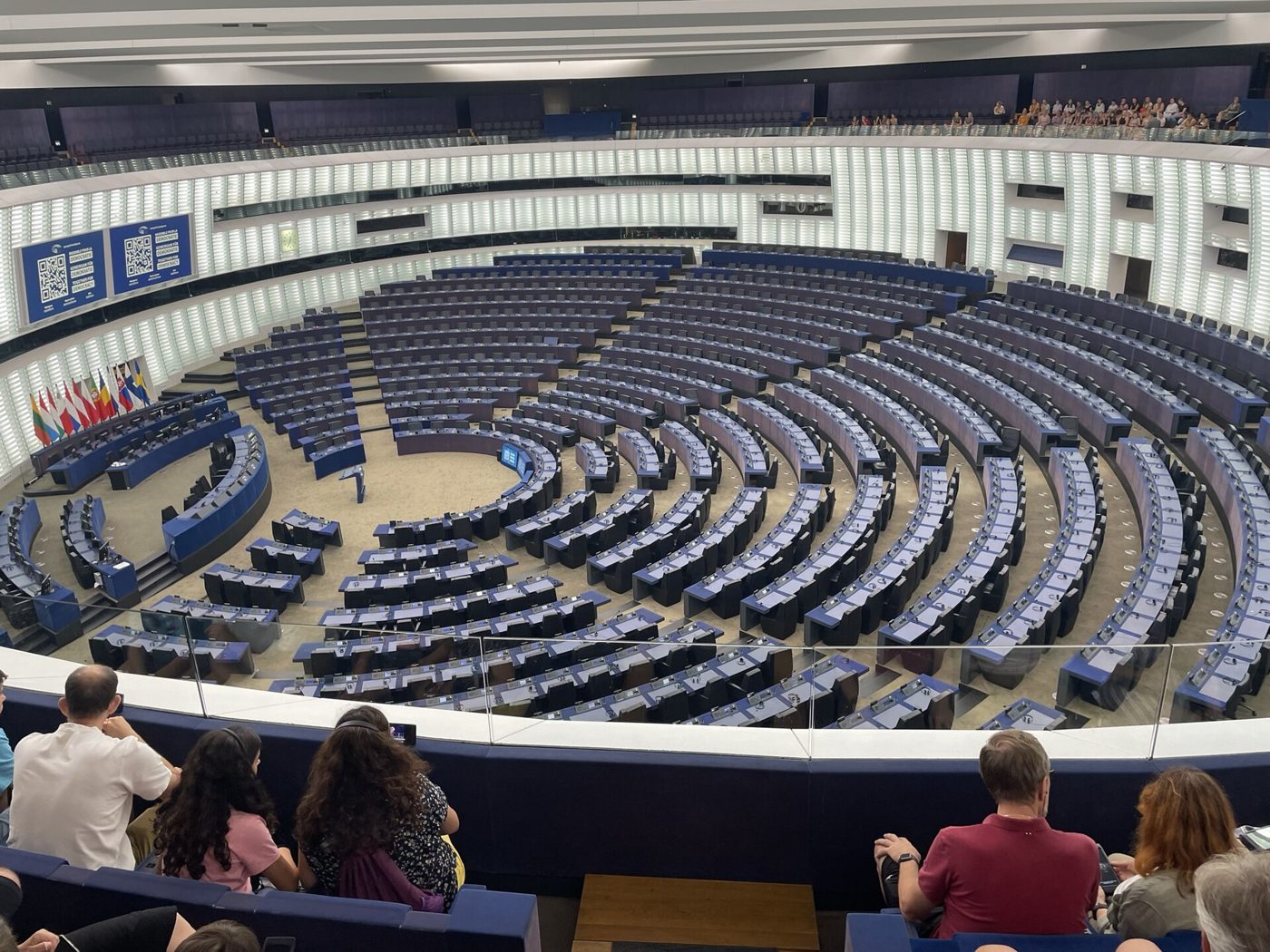
So the European Parliament wrote in a condition of its own. If the US still charged more than 15% on European goods made with less than half steel after 31 December 2026, the Commission could suspend Europe's tariff cuts. Washington never agreed to the condition. It did not need to: the US had no reason to move. On 1 December the Commission delivered the report its law required. American tariffs on European fridges still stood at 25%. The condition had been met. Washington did not expect the Commission to have the nerve to use it.
Real · The European Parliament in Strasbourg, 2023. Sebastian Wallroth, CC BY 4.0.
Then on 9 December, a year almost to the day after its first fine on X, the Commission ruled in the Grok case. It had opened the case in January after Grok was used to produce sexual images of real women and girls. The first fine, €120m in December 2025, had been set by how serious the breaches were, how long they lasted and how many users they affected, and was far below the legal ceiling. This time the Commission went to the ceiling: 6% of worldwide turnover. X has not published its accounts since Elon Musk took it private in October 2022, and during the case it refused to give the Commission its revenue. So the Commission used Twitter's last published figure, $5.08bn in revenue in 2021. It fined X 6% of that, about $305m. Musk called it censorship. Few in Europe agreed, given what the case was about.
The following week the US Treasury froze the American assets of Henna Virkkunen, the Commission's executive vice-president for tech sovereignty who had signed the decision, and of two of her officials. It was the treatment the US had given the judges of the International Criminal Court. A year earlier, the State Department had banned former Commissioner Thierry Breton and four others from entering the US. Now a serving member of the Commission could not hold an American bank account or pay with a Visa or Mastercard card.
Story · Dec 2026 · The declined card. Drawn for this page.
Brussels could not treat this as a trade dispute. It was an attack on the institution itself. But it also sensed the European public's mood. The Commission invoked the 1996 blocking statute, which forbids EU companies from complying with the sanctions, and asked member states to approve the Anti-Coercion Instrument, the EU's 2023 law for answering economic pressure from abroad. That needed a qualified majority: at least 15 of the 27 member states, representing at least 65% of the EU's population. Four large countries acting together can block it; Germany and France alone cannot carry it. Ministers would meet in January.
The one interactive · A qualified majority: 15 of 27 states, and 65% of the people
Tap a country to put it in the yes column. Each tile is sized by population, Eurostat, 1 January 2025. The rule is Article 16(4) of the Treaty on European Union; a blocking minority needs at least four states. The presets are the story's votes: who holds back in January and February is invented.
At their summit in mid-December, EU leaders also agreed an urgent change to the law that postponed the ban on Russian LNG, due to start on 1 January, by a year. Their reasons were plain. They did not want to fight Russia and America at the same time, and every American cargo that replaced a Russian one would give Trump more leverage over Europe. Kyiv protested, and so did the Baltic states. Merz said the delay changed nothing for Schwedt: there would still be no Russian oil there.
On 30 December von der Leyen announced that the Commission would start the procedure to suspend the EU's tariff cuts for the US under Parliament's clause. The Commission could not simply decide it. It had to put a draft to the Trade Barriers Committee, where member states' representatives vote by qualified majority, and the vote would come in January. If it passed, the cuts on American industrial goods could be suspended from 1 February. Washington called any such move a breach of the deal. Brussels pointed to the steel condition written into EU law six months before.
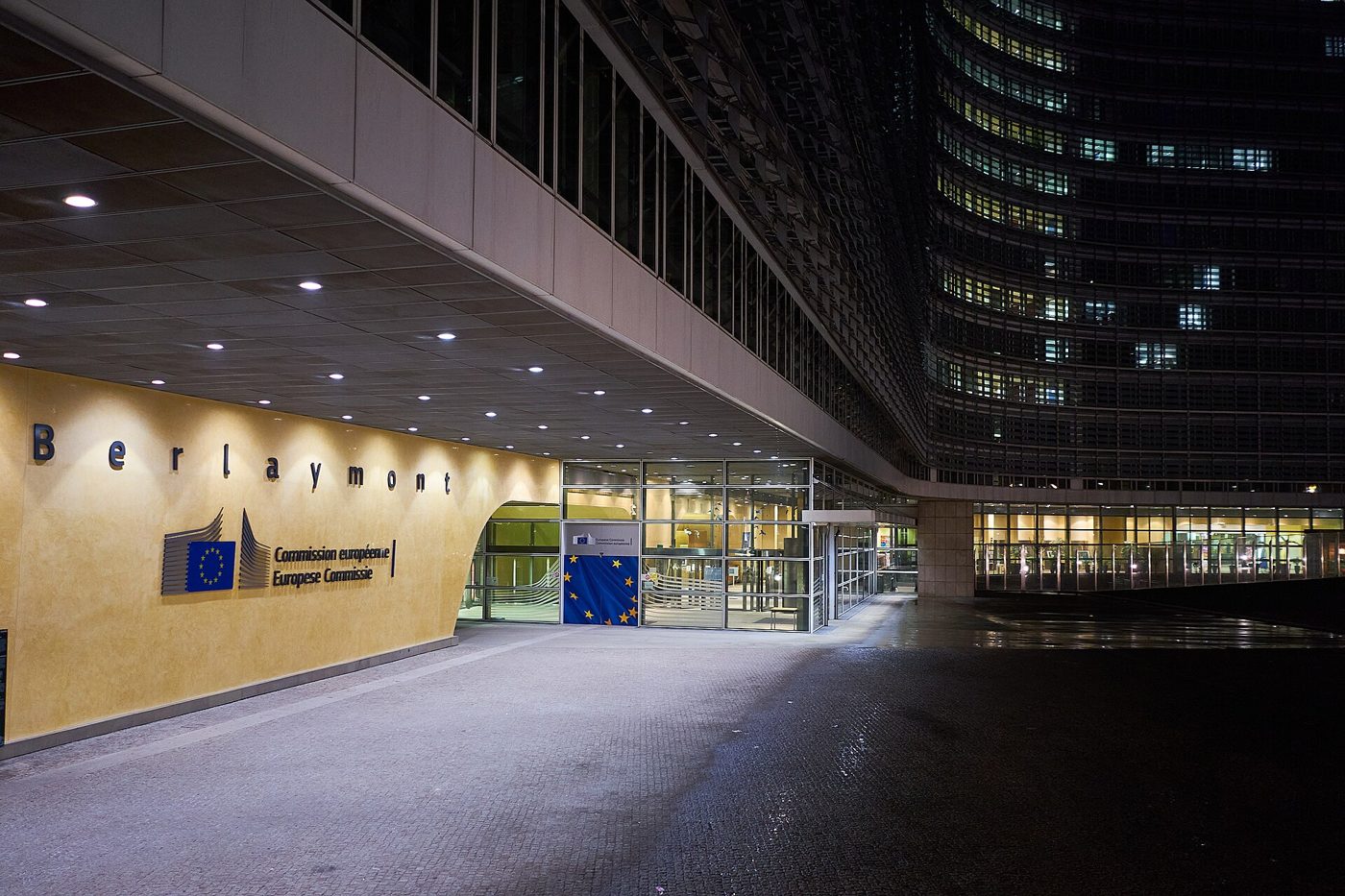
Real · The Berlaymont, the Commission's headquarters, at night, November 2017. Radek Kucharski from Warsaw, Poland, CC BY 2.0.
January and February 2027
The car figures
Wolfsburg, Munich and Stuttgart, and the Atlantic beyond them
The bond market moved first. It had done so before. After Trump's "Liberation Day" tariffs in April 2025, investors sold American government debt: the ten-year Treasury yield rose by about half a percentage point in a week, the sharpest weekly rise since 2001, and Trump paused most of the tariffs within days, saying people had been getting "yippy". In the first week of January 2027, as Europe moved towards counter-measures, the selling began again. European investors are among the largest foreign holders of American stocks and bonds. Some had started to bring money home in 2025, and more in 2026. Now the trickle became a stream. Treasury Secretary Scott Bessent warned Europe off, pointing out that Europe had no capital market deep enough to take the money, and the White House said it would respond even more aggressively if Europe went ahead.
The first jobs report of 2027, published the same week, showed that the economy had lost 50,000 jobs in December. Concerning, but not fatal on its own. Until then GDP growth had held up, carried by the AI build-out. But there were signs that consumer spending had been soft over the holiday season. When the five builders reported their results for the last quarter of 2026 at the end of January, they raised their spending plans once more. Their lenders charged them more for it, yet bought the bonds all the same.
Chart 4 again · US jobs, the change each month · December 2026 is the story's
The same chart as in November, with December's figure marked. Bureau of Labor Statistics to September 2026; the story after.
The new year had not brought the ban on Russian LNG, and Europe was still short of both diesel and gas, with storage well below normal and Qatar's cargoes still stuck behind Hormuz. The one piece of luck was the weather. December and January were unusually mild, and demand for gas to heat homes stayed low.
In Wolfsburg, Munich and Stuttgart, carmakers had seen the suspension coming. Through November and December they shipped as many cars to the US as their ports could load, to land them before Washington retaliated. Irish drug makers had done the same before the tariffs of early 2025. It made sense for each company. Together, it produced the figures that would trigger the tariffs they feared.
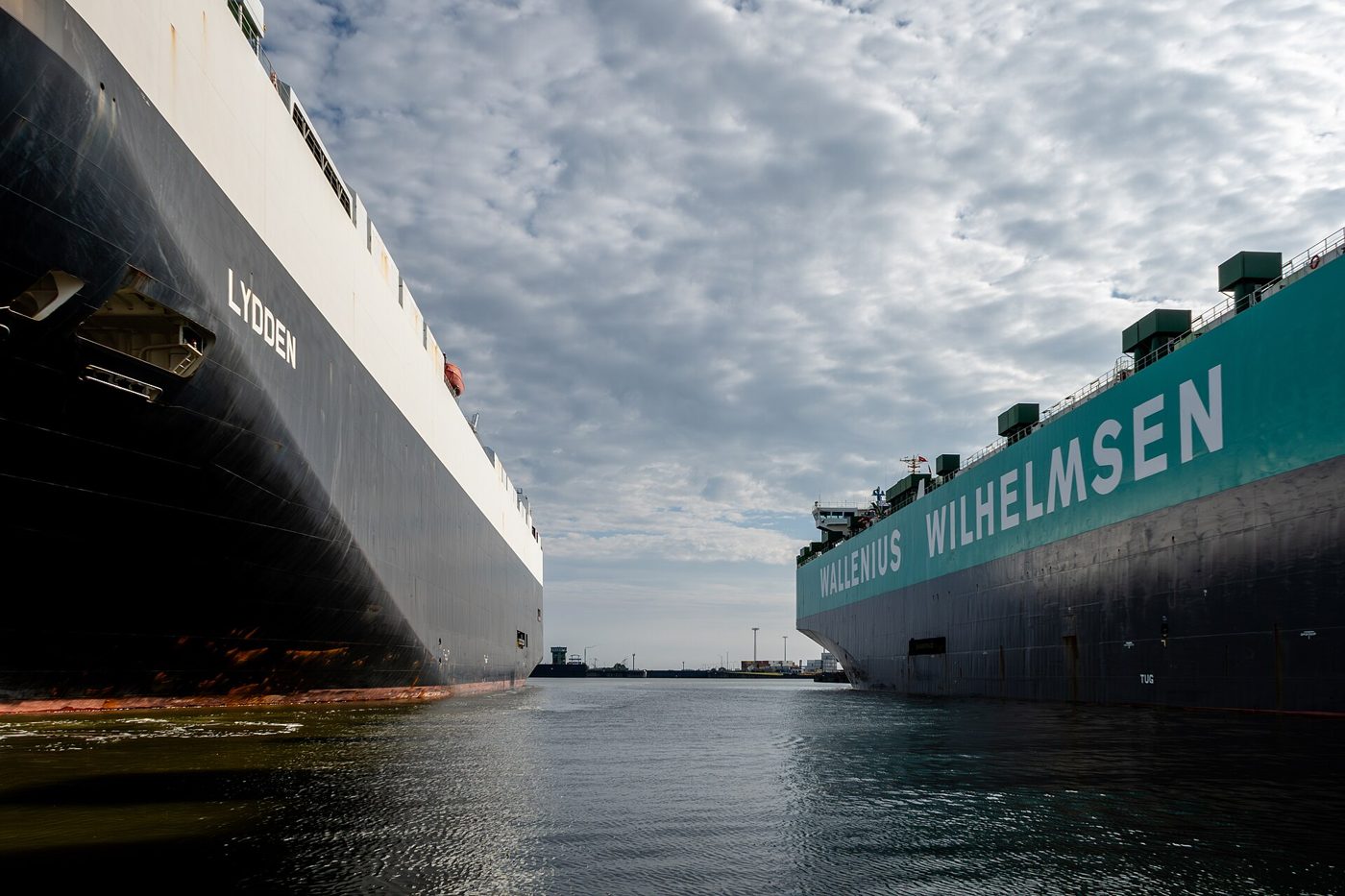
Real · Car carriers at Bremerhaven, August 2024. Dietmar Rabich, CC BY-SA 4.0.
The US releases its trade figures about five weeks after each month ends. The November figures came out on 7 January and showed European car shipments sharply up. Trump posted about them that evening. When EU trade ministers met later in January to vote on the Anti-Coercion Instrument, Germany still hesitated. Berlin did not want a fight over cars.
The full-year figures for 2026 came out on 5 February. Measured in dollars, the deficit with the EU was among the largest on record. The underlying trend pointed the other way: EU car exports to the US had fallen by about 20% in 2025 and kept sliding through most of 2026, until the year-end rush. Trump quoted the total, as he always did. He raised the tariff on European cars to 25% under Section 232, the national-security tariff law, which no court ruling on his emergency tariffs could touch. His stated reason was that Europe had been slow to accept American car safety and emissions standards. The real reason American cars sell badly in Europe is simpler. A Ford F-150 is almost six metres long, close to a metre longer than a standard European parking space.
Chart 5 · EU car exports to the United States, each month, 2024 to January 2027 · Real to July 2026, story after
Eurostat, exports of motor cars (HS 8703) from the EU27 to the United States, value. August 2026 onward is the story: three months at July's level, then the year-end rush, then the fall after the tariff.
The new Democratic Congress called for hearings. It did not have the two-thirds majority needed to overturn a veto.
In Berlin the tariffs settled the argument over how to vote on the Anti-Coercion Instrument. Germany had held back every European response for two years to protect its car exports. Now its cars were hit anyway, and there was nothing left to protect. Within a week Germany voted for the Anti-Coercion Instrument and for the suspension of the trade deal. The European Parliament, which had written the clause, backed the suspension by a large majority. From 16 February the EU's tariffs on American industrial goods were back.
The vote again · February: Germany moves, and the measure passes
The same tiles, with the February vote applied. Italy, Hungary, Slovakia and Ireland still say no in the story; it passes without them.
One complication remained. German brands build cars in America too. BMW's plant in Spartanburg, South Carolina, is the largest car exporter in the US by value, and Mercedes and Volkswagen also ship cars from American plants to Europe. European tariffs on American cars would partly tax German companies. So the EU aimed its new measures elsewhere: at American digital and financial services, under the Anti-Coercion Instrument, and at the €93bn list of goods it had prepared for counter-tariffs in 2025.
Musk, meanwhile, publicly signalled that he would not pay the Grok fine, and kept Grok's image tools running in Europe. The DSA has a last resort for this, allowed only when a breach continues, causes serious harm and involves a crime that threatens people's safety. The Commission argued that sexual images of children met that test. At the Commission's request, Ireland's media regulator, which supervises X because its European base is in Dublin, asked an Irish court to restrict access to the service. After the notice periods the law requires, X went dark across the EU in the third week of February, for four weeks that the court could renew. It was the first time a major platform had been blocked under the law. The timing was deadly for X. That same week Eurosky, the European project built on the AT Protocol that also runs Bluesky, which until then had offered only a single European-hosted account for use across other apps, launched a full social network of its own, with all its data held on servers in Europe. European users moved to it in their millions, Canadians followed, and so did a slice of Americans.
Story · Feb 2027 · X goes dark, on the tram home. Drawn for this page.
Markets took all of it badly. American shares fell for six sessions in a row, but now the ten-year Treasury yield fell, as American investors fled to the safety of government debt. The diesel ban and the car tariffs were now feeding not inflation but stagnation. In Europe the opposite happened, just as in the financial crisis: the gap between French and German borrowing costs widened sharply. France, with the largest deficit in the euro area's big economies and a fragile government, was where investors pulled out first. On 24 February the European Central Bank activated its Transmission Protection Instrument for the first time. The ECB created it in July 2022 to buy a country's bonds when its borrowing costs rise for reasons that have nothing to do with its own policies.
Chart 6 · American shares and the French–German spread, January 2026 to February 2027 · Real to 14 October, story after
S&P 500 closes at the end of each month; the spread between French and German ten-year yields, monthly averages to August 2026 and month-end readings after. The February points are the story's.
March 2027
The boom breaks, and Europe shores up its banks
The United States at night, the data centres lit
The first crack came from the company that had been the boom's best advertisement. Anthropic had gone public in the autumn at a valuation above $2tn, on the strength of revenue that was running at an annualised $65bn by July 2026 and that investors expected to pass $100bn by the end of the year. In early March a figure from its first quarterly report as a public company leaked before publication: revenue in January had run at an annualised $90bn, short of the $100bn to $120bn the market had assumed it would reach by December. Revenue was still growing at a staggering rate. The share price had assumed faster. Anthropic's shares fell by a quarter in two days, and the market dropped again.
Chart 3 again · The ladder, with the leaked figure · Real, plan and story
The same ladder as in October. Anthropic's run rate now carries the story's leaked January figure beside what investors had expected for the end of 2026.
Six weeks after the builders had raised their spending plans, the first of them changed course. In mid-March it told investors it would cut its 2027 spending by a third and pause two data-centre campuses. One cut was enough. Every dollar the builders did not spend was a dollar of lost revenue for the chip makers, the data-centre owners and the companies that rent out chips further down the chain. Nvidia's shares fell by a third in a week. Oracle, which had borrowed heavily to build data centres for OpenAI and whose default insurance had already reached record prices in 2026, lost its investment-grade rating. CoreWeave, the largest of the "neoclouds" that rent AI chips to others, stopped work on two sites and asked its lenders for time. The S&P 500 fell 14% in the fortnight after the cut, and the Nasdaq 21%, its worst two weeks since March 2020. Because about 40% of the market was a bet on AI, there was nowhere in the index to hide.
Chart 6 again · American shares and the French–German spread, to the end of March 2027 · Real to 14 October, story after
The same two panels as in February, run on to the end of March: the fall after the spending cut, and the spread coming in after the first common bond sale.
AI had been carrying the American economy. Jason Furman of Harvard had estimated that AI investment accounted for almost all US growth in the first half of 2025. Americans held more of their wealth in shares than in property, and about 40% of the stock market was a bet on AI. When shares fell, households stopped spending, and housebuilding, already sluggish, stopped. The jobs report published in early March showed another 50,000 jobs lost in February, and the surveys for March pointed to a loss of 150,000. A recession that had looked possible in February looked certain by the end of March.
Chart 4, last time · US jobs, the change each month · March 2027 is the story's forecast
Bureau of Labor Statistics to September 2026; the story after. March is the survey's forecast, not a reported figure.
Europe's fear was the doom loop. When a government's bonds fall in value, the banks that hold them grow weaker. If the government then has to rescue its banks, its debts grow and its bonds fall further. The loop nearly broke the euro in 2011 and 2012. This time the ECB had moved early, in February, buying French bonds under its Transmission Protection Instrument, and Europe's banks held far more capital than they had then. In March European government bonds fell, but the loop did not start.
The scare changed minds in Berlin. For a decade Germany had held up the last piece of the EU's banking union, a shared scheme to insure bank deposits across the euro area, proposed by the Commission in 2015. German governments had not wanted German savers to stand behind Italian or Greek banks. The best counter-argument had always been that a scheme like this is one you are far less likely to need once you have it. In March 2027 Berlin dropped its objection, and signalled that it was ready to complete the capital markets union too.
The Commission immediately encouraged member states to bring some of Europe's money home, while signalling that it expected the shift to be gradual. In the debate that followed Mario Draghi's 2024 report on European competitiveness, the usual estimate was that about €300bn of European savings went abroad every year, much of it into American markets, while European firms struggled to raise money. Now, with Washington hostile, the case for keeping savings in Europe made itself. That alone would not fix the fact that Europe's capital markets were fragmented, with 27 sets of rules and no single safe asset to anchor them.
Then Merz went further than any German chancellor before him. Germany had always resisted common EU borrowing as a standing tool. Even the €750bn Covid recovery fund of 2020 had been agreed as a one-off. In July 2026 Spain's economy minister, Carlos Cuerpo, had put a plan to euro-area finance ministers: the EU would borrow up to €850bn a year in its own name, not to spend more, but to replace part of what its governments already borrowed separately. The Commission would issue the bonds, national governments would honour the debt first, and the EU budget would stand behind it only as a last resort. The aim was a market deep enough to give the world a European safe asset: a bond investors could hold instead of American Treasuries, and a benchmark that would lower borrowing costs for European companies. Cuerpo put the saving at about €5bn a year to begin with, rising past €25bn once €5tn was outstanding, if the EU could borrow at Germany's rates. He insisted it was "not debt mutualisation" but efficiency, and said there was a "window of opportunity" while the dollar's standing was in question.
The Netherlands and Finland said no, Ireland held back, Italy welcomed it, France worried about moral hazard, and the Eurogroup's president said there was no consensus. In March 2027, with investors looking for somewhere other than America to put their money, Merz announced that Germany would back the Spanish plan. The Dutch, under their young liberal prime minister Rob Jetten, enthusiastically agreed. Only the Finns held out, for all of three days, but without Germany beside them their objection no longer carried the weight it once had.
What followed was the opposite of the euro crisis. In 2011 and 2012 every rescue had been agreed late, and Europe's borrowing costs had risen with each delay. This time the Commission's first sale of the new common bonds, at the end of March, was €25bn of ten-year paper, the largest bond the EU had ever sold. Orders came in above €200bn, eight times what was on offer. The precedent was real: in June 2021 the EU's first recovery-fund bond, €20bn, had drawn €142bn of orders. Investors leaving American assets wanted exactly what Europe was now selling: a large, safe asset in a currency that was not the dollar. Bessent had said no such market existed. Europe had just made one.
The order book · The first common bond, end of March 2027 · Story, with the real precedent of June 2021
The sale is the story's: €25bn offered, orders above €200bn. The precedent is real: the EU's first recovery-fund bond of June 2021, €20bn, drew €142bn of orders. Where the pins fall is invented.Story · 31 Mar 2027 · The order book: €25bn offered, €200bn asked for. Drawn for this page.